Monday, 11 April 2016

BURNING BUSINESS CONTROVERSY: WHETHER MATRIX ORGANIZATIONS ARE MORE SUCCESSFUL THAN OTHER FORMS


MULTI-DIMENSIONAL ORGANIZATIONAL DESIGN (MATRIX) IS THE BEST WAY TO RESTRUCTURE A BUSINESS

PRO: LOOK AT THE TRACK RECORD

Many companies are discovering they have no choice but to learn how to effectively execute a matrix organization. These companies operate with multiple business units in multiple countries. They distribute through multiple channels to different customer segments. In addition to the normal business functions, there are champions for each of these organizational dimensions. And very often these champions speak with equally strong voices.
If you are a company spending 4% or more on R&D, you will need a strong global business unit head to achieve the global scale and integration to profit from the R&D. If you are doing business in Brazil, China, and India, you are going to need strong government relationships and a strong country manager. When you need both strong businesses and strong countries, that’s when you need a matrix.
But does a matrix work? Yes, it does at the high performers like Procter & Gamble (PG), IBM (IBM), Nokia (NOK), Cisco (CSCO), and Schlumberger (SLB). These companies have moved beyond the usual debates about dotted lines. They have robust spreadsheet planning processes in which debates are resolved and joint goals are established. Collaborating teams create the plans.
The collaborators are rewarded while the old-school command and controllers leave. At Cisco, 20% of the management group left, and at P&G, it was 50%. These departures were positive changes, representing a victory of collaborators over the command and controllers. Management defines roles and responsibilities and holds people accountable. Managers rotate between units and prevent silos.
Most important, the successful companies have strong leadership teams that resolve disputes and create a one-company culture. Maybe there’s a matrix in your future.

CON: MATRIX IMPEDES PROGRESS


If you want to slow down your enterprise, all you have to do is introduce a matrix organization.
Leadership is the key driver to the success of a company. To ensure that leadership is more effective, you need organizational clarity, i.e., short decision paths, a smaller number of committees, and above all, an unequivocal allocation of responsibilities.
Matrix organizations feature exactly the opposite characteristics, which results in a high degree of complexity, unclear decision paths, unproductive agreement processes, and most worrisome, nontransparent responsibilities. Conflicts of competence are pre-programmed, and it is not clear who is responsible for successes and failures.
Matrix organizations blur responsibilities. Executives need to make decisions and accept responsibility. Matrix organizations, however, often suffer from fear of making mistakes in the face of the growing size of an organization.
In the past, companies such as ABB (ABB) and Unilever (UN) have shown that matrix organizations can do more bad than good. It was the matrix that nearly ruined ABB, and Unilever has been oscillating between different organizational designs since 1996.
An organization must serve the customer first. Having a matrix, you are not doing the customer a favor because decision processes are slowed. What kind of customer wants to talk to a sales representative who has no authority to decide on major aspects of the business relationship?
The last thing a company needs is an organization mainly driven by occupation with itself. Nearly all supposed advantages of a matrix organization can also be achieved by an intelligent line organization.


COMPETITIVE ADVANTAGE AND WEAKNESS OF GARMENTS INDUSTRY IN CONTEXT TO BANGLADESH AND SWOT ANALYSIS OF GARMENTS INDUSTRY IN CONTEXT TO BANGLADESH


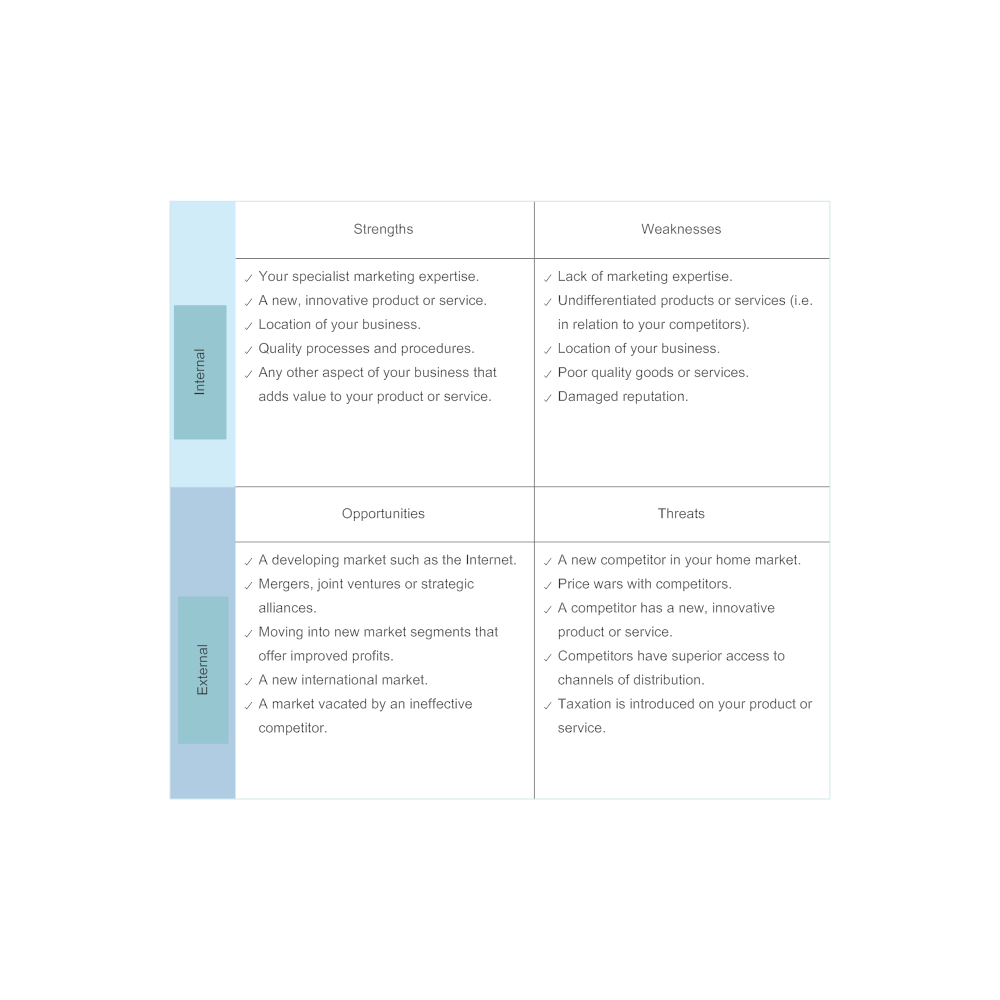
A SWOT analysis is a structured planning method used to evaluate the strengths, weaknesses, opportunities, and threats involved in a project or in a business venture. A SWOT analysis can be carried out for a product, place, industry or person. It involves specifying the objective of the business venture or project and identifying the internal and external factors that are favorable and unfavorable to achieve that objective.
SWOT ANALYSIS
The Bangladesh Garment Industry:
Ready made garment is a success story for Bangladesh. The industry started in the late 1970s, expanded heavily in the 1980s and boomed in the 1990s. The quick expansion of the industry was possible because of the following unique nature of the industry.
·       The technology is less complicated (easy to transfer),
·       Machineries are cheap and easy to operate (sewing machines),
·       A large female labor force that is easy to train is readily available.
Besides the low cost of labor, one of the major factors behind the success of RMG is the availability of offshore financing for world-priced inputs through back-to-back letter of credit (L/C) under the special bonded warehouse scheme. Presence of foreign buyers is also a major factor that introduces the system of international subcontracting. Foreign buying houses not only bring the international market to the doorstep of local entrepreneurs, they also ensure the availability of essential inputs such as imported fabrics and accessories for the industry. They also did the greatest favor for the RMG industry of Bangladesh by bringing the latest designs and by monitoring output quality. These measures especially enabled inexperienced garments entrepreneurs to establish a strong foothold during the 1980s.
Contribution of the Garment Industry
Although suffering from image crisis after the GSP withdrawal from USA, Bangladesh registered remarkable export growth in the just concluding fiscal year. RMG export grew 12.71% to 21.5 billion USD and total textiles export including RMG rose to 23.7 billion USD which is 11.24% higher than the previous financial year.
Export Promotion Bureau, EPB of Bangladesh has set an ambitious export target for the financial year 2013-14 that is 30.5 billion USD, 12.85% higher than previous year’s export 27.02 billion USD. Though the country could not achieved the last year target, this time also the country want to chase a big target. But the year has been started with a great uplift at its first month.
Bangladesh exported textile and clothing (T&C) products worth of 2696.4 million USD in the month of July, 13 which was 2538.8 million USD previous month and 2311.2 million USD in the same month of the previous year. In fact, exports of the country's clothing products witnessed a robust growth of more than 26 per cent in July 2013, amid clothing manufacturers' apprehension that their shipment orders might fall following the tragic Rana Plaza incidents and the image crisis that all were talking about of late aroused from the USA GSP issues.
SWOT Analysis
The new environment represents a serious threat to Bangladesh. On the one hand, it is opening a vast market with unlimited export potentials; on the other hand, it signals fierce competition from textile giants like China, India and, from efficient producers like Thailand, Sri Lanka and Vietnam. Competition may also come from Sub Saharan Africa and the Caribbean countries due to preferential treatment from USA through TDA 2000. Different regional agreements like NAFTA also appear to be unfavorable for the RMG sector of Bangladesh.
Given the changed scenario described above, the following sections focus on SWOT (strengths & weaknesses and opportunities & threats) analysis of the RMG industry of Bangladesh.
Strengths
One of the strengths behind the success of RMG of Bangladesh is the availability of low cost labor compared to other countries in the region. The labor rates in textile industry (compiled by Warner International) show that the average hourly wage rates for Bangladesh, India, Pakistan and Sri Lanka were respectively US$ 0.23, $0.56, $0.49 and $0.39 (Bhattacharya 1999a). Being in the manufacturing of RMG for two decades, Bangladesh now possesses a large pool of skilled & semiskilled manpower. Moreover, there are many unemployed young men and women who can easily be converted into a skilled workforce if needed.
Given the fairly long learning curve in this industry, extensive experience in dealing with foreign buyers, offshore bankers, shippers, and Clearing and Forwarding (C&F) agents is a valuable asset for the exporters of Bangladesh.
Weaknesses
Dependence on others for raw materials, low productivity, limited knowledge in international marketing information, poor infrastructure, political instability, disruptive trade unionism, inefficiency in port management, and excessive dependence on RMG sub-sector are the major weaknesses of the industry.
The industry is heavily dependent on others for outsourcing of raw materials such as clothing and accessories. Bangladesh is currently importing raw materials (gray fabrics) for its RMG factories from countries like India, China and Thailand under back-to-back L/Cs. In a quota free environment, these countries will obviously try to export finished apparels to North American markets rather than sell fabrics to countries like Bangladesh .With equal access to the world market, these direct competitors will either stop selling materials to their competitors like Bangladesh (a strategic move) or charge higher prices for their materials (because of increased internal demand). In either case, Bangladesh will face difficulty in procuring the required raw materials at reasonable prices.

Another major shortcoming of the apparel sector is the low productivity of its workers. The laborer productivity of Bangladesh is much lower than that of Sri Lanka, South Korea and Hong Kong. Low productivity might erode the advantage of low cost of labor of Bangladesh.
Exporters of Bangladesh also have limited access to current market intelligence and international trade information because, so far, foreign buying houses have been dominating the marketing part of the business. In a post MFA era, if these buying houses shift their bases to other countries, Bangladeshi exporters may face serious problems in finding their ultimate buyers.
At present problems in port management is a serious challenge to RMG industry of Bangladesh. The Chittagong Port is the most important entry and exit point for trade and commerce of the country. Almost 90 percent of the exports and 75 percent of the imports of Bangladesh are accomplished through the Chittagong Port. Therefore, it is considered as the country’s economic lifeline. The Chittagong Port is one of the most inefficient and corrupt ports in the world. A World Bank study estimated that handling charges for a 20-foot container were $640 in Chittagong compared with $220 in Colombo and $360 in Bangkok. The study added, inefficiency at Chittagong port could be costing the economy as much as $600 million annually. Besides this, there are numerous demands for “under-the-table” payments that are reportedly required at every step of export processing, from opening of letters of credit to the clearance of goods from Customs. According to a survey, the hidden costs paid by importers per consignment ranged from Tk.4, 700 to Tk.36, 800 (about US$100 to $735). These inefficiencies and corruption seriously hamper the competitiveness of Bangladeshi garment in the world market.
Besides numerous procedural, physical and/or infrastructure related bottlenecks; some sociopolitical consequences have added fuel to the chronic go-slow and congestion problem at the port. Some of these problems are:
·       Frequent work stoppage by different service providers, dock laborers, transport workers etc.
·       Excessive dock labor unionism (there are about 30 different agencies/groups including 22 workers unions).
·       Politicization of Collective Bargaining Agents (CBA).
·       Direct involvement of powerful local politicians, elite and musclemen
·       Illegal gratification practices (it has been a common phenomenon since long).
These vested interest groups are so powerful that they were able to stop the Government’s attempts to construct a private container terminal near the Chittagong Port and another at Patenga which were supposed to be funded by the Asian Development Bank. This and many similar activities of different groups are undoubtedly unlawful but it seems that nobody has the ability to stop it. For undue delays due to these sociopolitical factors, several times had the Singapore based CFTC imposed “Congestion Surcharge”. In a recent message (July 2000) to concerned ministries, K-mart Far East Ltd. has expressed deep concern over the deterioration of the management of Chittagong Port. The fax message says: Kmart can no longer sit on the sidelines without making our concerns known to the Bangladesh government. Kmart cannot afford to lose even one day of selling time due to inefficiencies and strikes at the Chittagong Port. Kmart cannot and will not accept a 5% reduction of shelf life due to outside issues such as inefficient port facilities and operations. Kmart will be watching very closely how the Bangladesh government reacts to recent events (strikes), and how much investment is made into upgrading the Port of Chittagong into a world class port. Without positive response and actions (not words) from Bangladesh government, Kmart merchants will be forced to reduce our investment in the Bangladesh garment industry and place future business in India, Central America, Africa, etc. The message clearly shows the severity of the problem and the reactions of valued customers. Poor infrastructure, frequent power failures, unfair dealings in government offices and political instability with frequent and unscheduled hartals (strikes) are additional problems. The potential danger is that if we fail to take immediate corrective action against these practices, Chittagong Port might be declared as an exclusion zone by international shipping concerns.

Opportunities
The greatest opportunities lie on the unlimited market outside Bangladesh. In a quota free world, the United Nations Commission for Trade and Development estimated that removal of the MFA and tariffs by developed countries will expand exports of clothing by 135 percent and textile by 78 percent. Trela and Whalley using a global general equilibrium model, estimated that the change will be much larger: the value of imports of textiles and clothing will rise by 305 percent in the US, 200 percent in Canada, and 190 percent in EU. This indicates that phasing out of quota will expand the market tremendously. Asia by far is the largest player in the world textile and clothing market and, industry experts are confident that, overall, Asia still will dominate.
Although Bangladesh lags behind in the textile sub-sector, it is very likely that the sector will get a boost through forward integration with RMG.
In the knitting sector, Bangladesh gained substantial competitive advantage over her competitors. According to the Bangladesh Knitwear Management and Exporters Association (BKMEA), the cost of yarn production per kg. In the private sector of Bangladesh is only US$1.48, whereas in India it is $1.78, in Pakistan $1.60, in Japan $2.38, in Korea $1.73 and in Thailand $2.78 (IFC 1998 cited in Bhattacharya 1999). Therefore, knit-RMG has a good prospect for Bangladesh in post MFA period.
The apparel sector of Bangladesh mainly exports low-cost products to the international market. But she can move into high value added products through diversification. This is not impossible given her two decades of experience, good relationship with buyers, worldwide reputation, and presence in quality-conscious United States and EU markets. Recently it has already penetrated the difficult but lucrative quality-conscious Japanese market.

Threats
India & Pakistan biggest threat for Bangladeshi RMG & textile export. The threat also will be the fierce competition from efficient producers like Hong Kong, China, Thailand, and Sri Lanka, Vietnam and many SSA and Caribbean countries. Threats might come not only from marketing but also from outsourcing. As mentioned earlier, more than 95 percent fabrics are imported from direct competitors. The potential danger after 2005 is that these countries might either stop selling their raw materials to Bangladesh or increase the price of their materials tremendously. Whatever may be the case, Bangladesh will lose some competitive edge in the world market.
Environmental issues, labor standard, Trade Related Aspects of Intellectual Property Rights (TRIPs) etc. might also appear as a deadly threat to developing countries like Bangladesh. In the words of Reza.
Although developing countries are not being singled out for environmental issues, being poorer, they cannot obviously maintain rigorous environmental standards. Moreover, the fact that their competitive advantage often lies in natural resources and pollution-intensive industries implies that they are vulnerable to being pressured to enforce stricter standards or face less market access for their exports to developed countries.
Other issues like child labor have already proved as a sensitive issue in the western market. Compliance to the Rules of Origin4 (ROO) may threaten the future market access and performance of RMG sector of Bangladesh. In the case of woven-RMG, a two-stage, and in the case of knit-RMG, a three-stage transformation (cotton to yarn, yarn to fabrics, and fabrics to RMG) process is required for imported yarn from India. Bangladesh exporters also had to pay back exempted duties amounting to about US$60 million (as per an agreement in October 1997) to EU on the grounds of ROO violation and circumvention (Bhattacharya 1999).

Regionalism is another threat to the industry. The World Bank country study (1995) expresses its concerns that “Over the medium term it is also possible that NAFTA may lead to a displacement of East Asian RMG imports into the U.S. and Canada. To the extent these exports by the more efficient East Asian producers are then diverted to the European Community, they may tend to displace Bangladesh’s RMG exports into Europe”. In the US market another challenge will come from Mexican apparel industry where it has zero tariff access because of NAFTA. Mexico’s share in US clothing imports increased by over 200% in the period 1993-98. Extension of NAFTA membership to the other Latin American and Caribbean countries may aggravate the situation further.

Conclusion:

No hurdles could resist Bangladesh achieving a modest growth in the first six month of the financial year 2013-2014. The country has registered 19.55 % growth in knitwear export and 20.37% growth in woven wear export despite so many political troubles. Amid great internal tension & month long blockade, the sector could keep their momentum going. Countries export growth in July to December hence now comes with a great inspiration for the rest of the year to achieve even more. But such a well-built sector could not really grow as the sector anticipated due to many reasons- most of which are not abnormal for developing countries. Huge infrastructure deficiency, political instabilities, high bank interest, frequent labor insurgency, unexpected accidents; Bangladeshi RMG & textile sector is coping up everything very well. Now the country is to face another big threat from the two big subcontinent countries due to the extra leverages they are gaining. Bangladesh should penetrate into new markets, diversify into new items, and relocate into new territories. If these measures are not taken in time, as Spinanger concludes, “The rapid growth rates that Bangladesh exhibited in world trade will be a thing of the past”.

WHAT IS SWOT AND HOW TO DO SWOT ANALYSIS IN MARKETING?


WHAT IS SWOT?

SWOT is basically the acronym for; Strengths, Weaknesses, Opportunities, and Threats. It is a very effective tool used in the business industry to form strategies. You synthesize the data from internal factors to find out your strengths and weaknesses. You use the external factors to identify the threats and opportunities.

SWOT ANALYSIS IN MARKETING

SWOT analysis in marketing is almost the same thing as a normal SWOT analysis. In this case, you do the analysis to form marketing strategies. SWOT analysis in marketing will help you decide which marketing strategy you should use to get the best result for your business. The strategy will help you to capitalize on the opportunities using all the strengths. It will also help to avoid the threats and minimize the weaknesses.

Strengths

Strengths are the factors that are going to help you get better results. Your company will do well if you can base your strategy around these things. Strength is an internal factor. This means you can control it. Things like resources, investment, and skilled labor are considered as strengths. In SWOT analysis in marketing, you will consider the following things as your strength:
§  Brand recognition – If your company is well known by the people then it can act as strength for your marketing strategy. You can use its name and recognition to advertize your products for sale.
§  Locations of the business – If your company or shop is located in the city center then you are likely to have a very good business. It makes it convenient for your customers to be able to visit your shop. This is a big strength that you may have over your competitors.
§  Specialist in marketing expertise – When you have an expert in marketing then you can develop a marketing strategy quite easily. He/she will have the required experience to form strategies based on experience. This is a massive boost when doing a SWOT analysis in marketing.
§  Introducing something new – What better way to capture the market than providing newer products? If your firm can come up with new ideas, then your marketing strategy will be based on innovation and novelty.

WEAKNESSES

Weaknesses are also internal factors that will derail you from making progress. When doing a SWOT analysis in marketing, you need to consider which things will make your marketing strategy look weak and unconvincing. The following factors can be called weaknesses:
§  Poor distribution – If you have a poor distribution channel for your products then you are likely to suffer. If the customers are not getting your products on time or even on the market, then that’s an obstacle for your marketing strategy.
§  Not distinguishable feature – You cannot stand out in the market if your products are no different from the rest of the competitors. You need to have your own signature or an identity.
§  Lack of online presence – In the modern era, online marketing is a key way to grab the customer’s attention. If you are not doing enough online, then you cannot succeed well.


OPPORTUNITIES

SWOT analysis in marketing will look at almost everything as an opportunity. This is because you never know what events or situations you can use as a marketing weapon. Things such as:
§  Advancement in technology – If your company buys newer technology. Or they come across newer ways to produce goods then that can be termed as an opportunity. This will help the company to strategize on a different way.
§  Increase in demand – A situation may arise when the demand for your goods may increase both locally and internationally. If that happens, then you need to seize the opportunity. You can advertize the fact that your good are wanted abroad and thus create a brand name for yourself. This is smart marketing.
§  Social Events – Nothing increases the demand for certain goods like social events. Gift items become hot in demand during Christmas. Fireworks are sold every minute day before New Year’s Eve. So when such an opportunity is opened up, the marketing strategy should be to take full advantage of the situation. Offer those discounts and other benefits so that your product is sold more.


THREATS

While doing a SWOT analysis in marketing, you have to be very careful regarding the situations that will hamper your marketing strategy. These situations are known as threats. Threats develop come out of nowhere. So it is better to identify them as soon as possible. That way the SWOT analysis in marketing will have a contingency plan to thwart the threat. The following conditions can be considered as a threat:
§  Competitors lower price -This has to be the toughest threat to deal with. If your competitor lowers the price of their product, then there are very few things you can do about it. People are always likely to go for things that are less expensive. However if your SWOT analysis in marketing has this noted down, then you are likely to have a backup plan for it. Offering better quality or promotional offers may help.
§  Changes in consumer choice – If your consumers all of a sudden decide to change their choice then you are likely to be in trouble. Fashion trends are always going to change, and this becomes a threat if you are producing the same kind of goods or services.
§  Economic condition – Inflation, exchange rates, taxes and so on are all economic factors. If these things change too often, then your company will be affected in the negative way. Doing a SWOT analysis in marketing will require you to keep such things on mind and come up ways to avoid them.


WHAT IS PESTEL ANALYSIS AND HOW TO CONDUCT PESTLE ANALYSIS


A PESTEL analysis is a framework or tool used by marketers to analyse and monitor the macro-environmental (external marketing environment) factors that have an impact on an organisation. The result of which is used to identify threats and weaknesses which is used in a SWOT analysis.
PESTEL stands for:
P – Political
E – Economic
S – Social
T – Technological
E – Environmental
L – Legal
Political Factors
These are all about how and to what degree a government intervenes in the economy. This can include – government policy, political stability or instability in overseas markets, foreign trade policy, tax policy, labour law, environmental law, trade restrictions and so on.
It is clear from the list above that political factors often have an impact on organisations and how they do business. Organisations need to be able to respond to the current and anticipated future legislation, and adjust their marketing policy accordingly.
Economic Factors
Economic factors have a significant impact on how an organisation does business and also how profitable they are. Factors include – economic growth, interest rates, exchange rates, inflation, disposable income of consumers and businesses and so on.
These factors can be further broken down into macro-economical and micro-economical factors. Macro-economical  factors deal with the management of demand in any given economy. Governments use interest rate control, taxation policy and government expenditure as their main mechanisms they use for this.
Micro-economic factors are all about the way people spend their incomes. This has a large impact on B2C organisations in particular.
Social Factors
Also known as socio-cultural factors, are the areas that involve the shared belief and attitudes of the population. These factors include – population growth, age distribution, health consciousness, career attitudes and so on. These factors are of particular interest as they have a direct effect on how marketers understand customers and what drives them.
Technological Factors
We all know how fast the technological landscape changes and how this impacts the way we market our products. Technological factors affect marketing and the management thereof in three distinct ways:
·       New ways of producing goods and services
·       New ways of distributing goods and services
·       New ways of communicating with target markets
Environmental Factors
These factors have only really come to the forefront in the last fifteen years or so. They have become important due to the increasing scarcity of raw materials, polution targets, doing business as an ethical and sustainable company, carbon footprint targets set by governments (this is a good example were one factor could be classes as political and environmental at the same time). These are just some of the issues marketers are facing within this factor. More and more consumers are demanding that the products they buy are sourced ethically, and if possible from a sustainable source.
Legal Factors
Legal factors include - health and safety, equal opportunities, advertising standards, consumer rights and laws, product labelling and product safety. It is clear that companies need to know what is and what is not legal in order to trade successfully. If an organisation trades globally this becomes a very tricky area to get right as each country has its own set of rules and regulations.

After you have completed a PESTEL analysis you should be able to use this to help you identify the strengths and weaknesses for a SWOT analysis.

CONCEPT OF FEASIBILITY STUDY, HOW TO MAKE A FEASIBILITY STUDY AND STEPS OF FEASIBILITY STUDY


What Is a Feasibility Study?
 Simply put, afeasibility study in project management is used to find out if a project is feasible prior to investing real resources and dollars. Often, project managers are hired to complete studies for clients to determine if a proposed venture will be profitable as well as what risks it will encounter.
The feasibility process is completed prior to project initiation or often, it can be utilized to see if a set of processes or procedures will enhance or harm project outcomes.
  Feasibility Study Steps
Whether you are working for a client to see if a business, product, project, or process is feasible, follow these steps. In our Media Galley you will find an example of a feasibility study for a client and a feasibility study template you can use to assist you.
·        Project Description – Identify the project name and purpose. Include details including stakeholders, and end result expected.
·        Goals – List long and short-term goals and what processes will be needed to achieve those goals.
·        Timeline – What will be the estimated time until project completion?
·        Costs and Budgeting – Include all costs incurred for the project including the cost of the feasibility study itself.
·        Purpose – What purpose does the project have and whom will it benefit?
·        Market Analysis – If applicable, will the market or market environment benefit from the project. If so, list why.
·        Resources – Identify all the resources both IT, technical, inventory, and human that will be needed to complete the project.
·        Project Process – How will the project flow? Include flow charts showing project stages.
·        Management and Teams – Who will manage and who will work on scheduled tasks? Will project management outsourcing be needed?
·        Observations– Statements that do or don’t support the project should be included here. If for a client, does the client have the finances to complete the project or are there alternatives? If for a project or process, will it work and will it be beneficial?


Outcomes of a Feasibility Study
Often, after the completion of a study, a determination may be made not to proceed with the project. A good feasibility study sample will include:
·        Project Problems – Does the study include risk or problematic areas that need to be addressed and are they clearly identified?
·        The Outcome – Ever study should identify the process, product, client request, and goal and how they will affect the outcome; positively or negatively. Will outcomes be beneficial or deterrent?
·        Alternatives – Are possible alternatives available or suggested and researched?
·        Assessment – The assessment part of your feasibility study should include risk management and controls, solutions, if the project is feasible, and how the project should be implemented.
Summing Up
For projects to be considered, especially if they are to undertake many resources including real dollars, real time, and real effort, a feasibility study is essential prior to project initiation, project scope, and initiation.
If a project appears overwhelming or requires much detail and analysis to get to even begin the project, consider completing a feasibility study prior to the project.


HOW TO DEVELOP A MARKETING PLAN: DEVELOPING A MARKETING PLAN


Marketing takes time, money, and lots of preparation. One of the best ways to prepare yourself is to develop a solid marketing plan. A strong marketing plan will ensure you’re not only sticking to your schedule, but that you’re spending your marketing funds wisely and appropriately.
10-Step
A marketing plan includes everything from understanding your target market and your competitive position in that market, to how you intend to reach that market (your tactics) and differentiate yourself from your competition in order to make a sale.
Your small business marketing budget should be a component of your marketing plan. Essentially, it will outline the costs of how you are going to achieve your marketing goals within a certain timeframe.
If you don't have the funds to hire a marketing firm or even staff a position in-house, there are resources available to guide you through the process of writing a marketing plan and developing a market budget.
Bend Your Budget When Necessary and Keep an Eye on ROI
Once you have developed your marketing budget, it doesn’t mean that it’s set in stone. There may be times when you need to throw in another unplanned marketing tactic -- such as hosting an event or creating a newspaper ad -- to help you reach your market more effectively.
Ultimately, it’s more important to determine whether sticking to your budget is helping you achieve your marketing goals and bringing you a return on investment (ROI) than to adhere to a rigid and fixed budget.
That's why it's important to include a plan for measuring your spend. Consider what impact certain marketing activities have had on your revenues during a fixed period, such as a business quarter, compared to another time period when you focused your efforts on other tactics. Consider the tactics that worked as well as those that didn’t work. You don't have to cut the tactics that didn't work, but you should assess whether you need to give them more time to work or whether the funds are best redirected elsewhere.
Granted, some tactics are hard to measure -- such as the efficacy of print collateral (brochures, sales sheets, etc.), but you need to consider the impact of not having these branding staples in your market tool kit before you reign in your graphic design and print funds.
Marketing plans should be maintained on an annual basis, at a minimum. But if you launch a new product or service, take time to revisit your original plan or develop a separate campaign plan that you can add to your main plan as an addendum.

At the end of the day, the time spent developing your marketing plan, is time well spent because it defines how you connect with your customers. And that's an investment worth making.

Sunday, 10 April 2016

THE CONCEPT OF TRADITIONAL MARKETING MYOPIA AND NEW MARKETING MYOPIA' REVISITED: PERHAPS A NARROW VISION IS BETTER BUSINESS


Fifty-three years ago, the Harvard Business Review published what went on to become one of the most-quoted articles ever to appear in any magazine or newspaper: "Marketing Myopia" by Theodore Levitt.
Perhaps it's time for a marketing person to point out the myopia in management thinking. A myopia that has undermined companies like Kodak, IBM, Sears,Xerox, Dell, Hewlett-Packard and many others.
Management has fallen in love with brands without realizing that every brand has a potentially fatal weakness. A brand stands for a category. Once a brand becomes strongly embedded in consumers' minds, it's almost impossible to move that brand into another category.
Yet management continues to focus on pushing their beloved brands into more and more categories. That's the myopia that afflicts top management.
What marketing myopia hath wrought?
One of the ironies about Ted Levitt's article is that the strategy he recommended may have contributed to today's management myopia.
Here is the most-famous quote from the article: "The railroads did not stop growing because the need for passenger and freight transportation declined. That grew. The railroads are in trouble today not because that need was filled by others (cars, trucks, airplanes, and even telephones) but because it was not filled by the railroads themselves. They let others take customers away from them because they assumed themselves to be in the railroad business rather than in the transportation business."
Let me repeat: "They assumed themselves to be in the railroad business rather than in the transportation business."
Do you know of any successful "transportation" companies?" I don't.
·        There are successful airline companies: Southwest and JetBlue.
·        Successful package-delivery companies: FedEx and UPS.
·        Successful pipeline companies: Kinder Morgan and Magellan.
·        Successful container-ship companies: Maersk and MSC.
·        Successful cruise-line companies: Carnival and Royal Caribbean.
And oddly enough, there are successful railroad companies. But how they became successful is a story worth telling.
Saving the railroad business 
Ted Levitt was certainly correct in his assessment that the railroad industry was in trouble. Back in 1960, the year "Marketing Myopia" was published, one of the largest railroads in America was the New York Central.
In 1968, the New York Central merged with its rival Pennsylvania Railroad to form Penn Central, which went bankrupt in 1970.
It's been my experience that companies are eager to jump into any new category that seems to threaten their own business, when a better strategy might be to do just the opposite.
Which is exactly what the railroad industry eventually did. Instead of being in the passenger-and-freight railroad business like Penn Central, today's successful railroads are focused on freight. And they are very successful.
In the past decade, the four largest railroads in America (Union Pacific, Burlington Northern Sante Fe, CSX and Norfolk Southern) have never had an unprofitable year. Together they have had revenues of $502.1 billion and net profits of $66.2 billion, or a net profit margin of 13.2%. (Not too far behind Procter & Gamble's net profit margin over the past decade of 14.1%.)
In 2009, the business community was shocked when Warren Buffet's Berkshire Hathaway group bought the 78% of Burlington Northern Sante Fe it didn't already own. But the investment has done extremely well. Revenues are up 49% and profits are up 96%.
When you narrow your company's focus, two things happen, both of which are good. (1) You become more efficient at what your company is doing. (2) You strengthen your brand because it now has a better chance of standing for something.
The "information" business
One company that bought into the marketing myopia doctrine early on and decided to expand its vision was Xerox. In 1969, Xerox spent nearly a billion dollars to buy a mainframe computer company, Scientific Data Systems, which it promptly changed to Xerox Data Systems. Ted Levitt would have been pleased.
In a 1970 Business Week article entitled "Two gee-whiz giants go at each other,"
Xerox President C. Peter McColough said: "Xerox and IBM are the two big companies exclusively in the information business. IBM owns the manipulative data processing part, and we own a part that puts things on paper."
"But the lines of separation are getting blurred, and it will be harder and harder to distinguish them. Sometime in the 1970s, we intend to be able to say to any big customer, 'We can handle all your information needs.'"
The "office automation" business
By the time the 1980s rolled around, Xerox's mainframe computer business was long gone and the company had narrowed its thinking from "information" to "office automation."
It had high hopes for the 820, its first personal computer. "We think the 820 could accelerate the move to office automation," declared a Xerox vice president.
"Team Xerox" was the advertising campaign that launched the company's office automation effort. "We'd suggest talking to a company that offers more than just typewriters. Or just copiers."
"Only Team Xerox can offer you a complete line of copiers, of Memorywriter typewriters, of electronic printers, of facsimile machines, of computers and professional workstations and an Ethernet network that can tie most of these machines together right now."
By the 1990s, reality had set in. Team Xerox was disbanded and the financial-services firms Xerox had bought in the 1980s were sold off.
Once again, Xerox was a copier company.
The "computer" business
For decades, IBM dominated the mainframe computer business with a market share in the 70% range.
With the company's 1981 introduction of the first 16-bit business personal computer (the 5150, commonly known as the IBM PC), the company was on a roll.
Within two years, the IBM PC was the best-selling personal computer in America. And the media lavished praise on the company and its strategies.
Time magazine, July 11, 1983: "The colossus that works. Big is bountiful at IBM."
The following year, IBM had profits of $6.6 billion, the largest any company anywhere in the world had ever achieved. That same year, Fortune magazine selected IBM as "the most admired company in America."
By the 1990s, however, IBM was in deep trouble. In 1991, IBM lost $2.9 billion. In 1992, $5.0 billion. In 1992, $8.1 billion.
What a great case for another marketing myopia article. "IBM is in trouble today because they assumed themselves to be in the mainframe business rather than in the computer business."
But that's a myth. By the 1980s, IBM was into every aspect of the computer business. Mainframes, midrange, personal computers, copiers, telephones, satellites, software, you-name-it. Ted Levitt would have been pleased.
Saving IBM
Why did IBM get into trouble? Conventional wisdom faulted IBM's "mainframe mentality" and their failure to follow the computer development into other categories.
But I think it's the opposite. The company only made progress when it got out of the computer hardware business, except for its dominant position in mainframes.
Over the years, IBM has sold its copier business to Kodak, its Lexmark printer business to an investment firm, its networking hardware business to Cisco, its disk drives to Hitachi, its personal computer business to Lenovo and its digital printer operations to Ricoh.
Which left the company with mainframes.
What's a mainframe anyway? It's the electronic nerve center of every major corporation in the world. Companies may not be buying a lot of mainframes, but they certainly depend on them to keep their companies running efficiently.
In order to serve the needs of these mainframe-dependent companies, IBM has made a major push into services and software. In 2002, IBM bought the consulting and technology services unit of PricewaterhouseCoopers.
Last year, services and software accounted for 80% of IBM's revenues. And the company's net profit margin was an astonishing 15.9%.
The "communications" business
Did advertising agencies decide they were in the "communications" business and start to publish magazines and newspapers? Or operate radio and TV stations?
Actually the opposite happened. Most advertising agencies are more successful today because they got out of the media-buying function and focused on their core strength: Creating the strategies and messages that build brands.